
The Investment Reality
"We're thinking about selling in five years," said Mr Henderson from Arnold during his kitchen consultation last spring. "Everyone says kitchen renovation adds value, but does it actually? And how much should we spend to get a good return?"
It's a sensible question that Emma hears regularly. Kitchen renovation is expensive, and families want to know whether they'll see financial return on their investment alongside the daily benefits of a better kitchen.
The honest answer is: it depends. Kitchen renovation can add significant property value, but not all kitchen improvements deliver the same return. Understanding local market conditions, buyer expectations, and appropriate investment levels makes the difference between profit and disappointment.
After three years of following up with customers and working with local estate agents, we've gathered real data about kitchen renovation ROI in Nottinghamshire. The results might surprise you.
Cooper, our springer spaniel, has heard enough property value discussions to know that the happiest customers are usually those who renovated for their own enjoyment first and property value second.
Current Market Data (Nottinghamshire Region)
Estate Agent Insights
Local buyer expectations: Estate agents across Mansfield, Arnold, and Newark report that buyers now expect modern, functional kitchens. Properties with dated kitchens either sell slowly or attract lower offers.
"Ten years ago, buyers expected to renovate kitchens themselves," explains Sarah from a leading Mansfield estate agency. "Now they want move-in ready properties. A poor kitchen can knock £10,000-£15,000 off offers."
Time-on-market differences: Properties with quality kitchens sell 40% faster than those needing renovation. In competitive markets, this speed advantage can be more valuable than price premiums.
Price negotiation factors: Buyers use kitchen condition as major negotiation points. Dated or poor-quality kitchens give buyers reasons to reduce offers significantly.
Quality perception impact: Estate agents report that kitchen quality affects buyers' perception of entire properties. Quality kitchens suggest well-maintained homes, while poor kitchens raise concerns about hidden problems.
Regional Property Value Analysis
Mansfield market trends: Average property values have increased 15% over three years, with kitchen quality being a significant factor in achieving above-average prices.
Newark buyer preferences: Young professional buyers prioritise kitchen quality over most other factors. Family buyers want functionality and storage over dramatic styling.
Arnold and Carlton dynamics: Established family areas where kitchen renovation often determines whether properties appeal to their target market segments.
Rural vs. urban considerations: Rural properties often need kitchen renovation to attract buyers accustomed to modern convenience. Urban properties compete directly on kitchen quality.
Actual ROI Data from Our Customers
12-month follow-up surveys: We survey customers annually about satisfaction and property value impacts. The data shows clear patterns about which renovations deliver value.
Estate agent feedback: Local estate agents provide insights about how our customers' properties perform in the market compared to similar homes without renovations.
Valuation tracking: Some customers have had formal valuations before and after renovation, providing concrete ROI data for different investment levels.
ROI by Investment Level
Budget Renovations (£8,000-£15,000)
Typical improvements: Basic quality units with laminate worktops, standard appliances, and straightforward installation. Focus on functionality over luxury.
Expected value increase: 60-80% of investment A £12,000 renovation typically adds £7,000-£9,500 to property value. Not full cost recovery, but significant improvement in marketability.
Market appeal enhancement: Budget renovations move properties from "needs updating" to "acceptable condition," dramatically improving buyer appeal and reducing time on market.
Sale timeline improvement: Properties with budget kitchen renovations sell 3-4 weeks faster than those needing complete renovation, saving estate agent fees and stress.
Buyer perception upgrade: Modern, functional kitchens create positive first impressions that influence buyers' attitudes toward entire properties.
Real example: The Williams family in Newark spent £11,500 on kitchen renovation in 2022. When they moved in 2024, estate agents estimated the kitchen added £8,500 to their sale price and helped achieve asking price within two weeks.
Mid-Range Renovations (£15,000-£30,000)
Quality improvement impact: Symphony Gallery kitchens with quartz worktops, quality appliances, and professional installation. Balance of functionality, durability, and appearance.
Expected value increase: 70-90% of investment A £22,000 renovation typically adds £15,000-£20,000 to property value. Near-complete cost recovery plus improved marketability.
Competitive market positioning: Mid-range renovations position properties competitively against new builds and recently renovated homes in the same price bracket.
Buyer demographic expansion: Quality kitchens appeal to broader buyer segments, including young professionals and established families with higher expectations.
Sale negotiation strength: Quality kitchens eliminate buyer objections and provide positive selling points that support asking prices.
Case study: The Davies family in Sutton-in-Ashfield invested £24,000 in 2023. Their 2024 valuation showed £21,500 value increase, and they received full asking price within 10 days of marketing.
Premium Renovations (£30,000+)
Luxury market positioning: High-end materials, bespoke elements, and premium appliances. Investment-level quality that targets discerning buyers.
Expected value increase: 60-75% of investment A £35,000 renovation typically adds £21,000-£26,000 to property value. Lower percentage return but positions property in premium market segment.
Target buyer limitation: Premium kitchens appeal to specific buyer segments with higher expectations and budgets. Smaller market but higher values.
Over-improvement risk factors: Risk of investing beyond what local market supports. Important to understand neighbourhood value ceilings.
Long-term value retention: Premium materials and installation maintain appeal longer, providing better value retention over time.
Example: The Pattersons' £38,000 kitchen renovation in Arnold added £26,000 to property value but, more importantly, positioned their home as the premium option in their price range, achieving £12,000 above original asking price.
Property Type Considerations
Victorian Terraces
Period property expectations: Buyers expect character properties to have quality kitchens that respect period features while providing modern functionality.
Character preservation importance: Kitchen renovations that damage period character reduce rather than increase property values. Sensitive renovation essential.
Modern convenience integration: Successful renovation balances period charm with contemporary convenience. Poor integration reduces appeal to target buyers.
Target buyer profiles: Young professionals and established families who want character with convenience. Quality kitchen renovation essential for this market.
Investment optimisation strategies: Focus on quality materials and sympathetic design rather than dramatic modernisation that damages character.
1960s Semi-Detached Properties
Modernisation necessity: These properties often need complete kitchen renovation to compete with modern alternatives in similar price ranges.
Layout improvement opportunities: Open-plan conversion and modern layouts can transform these properties and significantly increase values.
Energy efficiency integration: Modern appliances and improved insulation during renovation appeal to cost-conscious buyers.
Family market appeal: Quality kitchen renovation particularly important for family buyers who prioritise functionality and convenience.
Investment timing considerations: Kitchen renovation often part of broader modernisation that transforms these properties' market positioning.
Modern Properties
Quality differentiation importance: In competitive new-build markets, kitchen quality often differentiates otherwise similar properties.
Contemporary standard expectations: Buyers expect modern properties to have contemporary kitchens with latest appliances and design trends.
Technology integration value: Smart appliances and modern convenience features appeal particularly to buyers of contemporary properties.
Lifestyle enhancement focus: Modern property buyers often prioritise lifestyle benefits over traditional features.
Market positioning strategies: Premium kitchen renovation can position modern properties as superior options in competitive segments.
Factors That Maximise ROI
Layout Optimisation
Space efficiency improvement: Better layouts that maximise storage and workflow appeal to all buyer segments and add measurable value.
Traffic flow enhancement: Open-plan integration and improved circulation patterns particularly valuable in family homes.
Functionality upgrade: Modern storage solutions and workspace organisation appeal to buyers regardless of style preferences.
Storage optimisation: Adequate storage solutions address common buyer concerns and add practical value.
Family living enhancement: Layouts that support modern family life appeal to target buyers for most Nottinghamshire properties.
Quality vs. Cost Balance
Value engineering principles: Investing in quality where it matters most while managing costs in less critical areas.
Buyer expectation meeting: Understanding what local buyers expect and ensuring renovation meets those standards without unnecessary expense.
Durability investment: Quality materials and installation maintain appeal longer, protecting investment value over time.
Maintenance reduction: Low-maintenance materials and quality installation reduce ongoing costs for buyers.
Appeal optimisation: Design choices that appeal to broad buyer segments rather than personal preferences.
Timeless Design Choices
Trend avoidance strategies: Classic design elements that won't date quickly protect long-term value better than fashionable choices.
Classic appeal maintenance: Traditional quality and proportions that appeal across different buyer demographics and taste preferences.
Future-proofing approaches: Design flexibility that allows future updates without complete renovation.
Broad appeal maximisation: Choices that appeal to various buyer segments rather than niche preferences.
Longevity assurance: Materials and design elements that maintain appeal over 10+ year ownership periods.
Factors That Minimise ROI
Over-Improvement Risks
Neighbourhood value ceiling: Investing beyond what local market can support reduces ROI and may make properties difficult to sell.
The Henderson family spent £45,000 on kitchen renovation in a £180,000 house. While beautiful, the investment exceeded local market expectations and recovery was limited.
Target market mismatch: Luxury renovation in areas where buyers prioritise value over premium features.
Investment excess: Spending more than necessary to achieve market positioning goals.
Recovery impossibility: Investments that can't be recovered through increased property values.
Market timing issues: Premium renovation during market downturns when buyers prioritise value over luxury.
Personal Taste Dominance
Niche appeal limitation: Highly personal design choices that appeal to limited buyer segments.
Buyer alienation risk: Bold colour choices or unusual layouts that reduce rather than increase buyer appeal.
Market restriction: Design choices that appeal only to specific buyer segments, limiting market size.
Sale difficulty increase: Unusual features that require specific buyer preferences for successful sale.
Price reduction necessity: Properties with limited appeal often sell for less than neutral alternatives.
Quality vs. Investment Mismatch
Under-investment problems: Insufficient investment that doesn't bring properties up to buyer expectations.
Cheap appearance issues: Budget materials that look cheap and suggest poor maintenance standards.
Durability concerns: Poor-quality renovation that buyers perceive as short-term fix requiring future investment.
Buyer scepticism: Obviously cheap renovation that raises concerns about property maintenance standards.
Negotiation weakness: Poor-quality renovation that gives buyers reasons to reduce offers.
Market Timing Considerations
Pre-Sale Renovation
Market condition assessment: Understanding whether current market conditions favour renovated properties over fixer-uppers.
Buyer expectation analysis: Assessing what buyers in your area and price range expect from kitchens.
Competition evaluation: Understanding how renovation will position your property relative to current market competition.
Investment timing: Optimising renovation timing for maximum market impact and value recovery.
Recovery probability: Realistic assessment of investment recovery based on local market conditions.
Long-Term Ownership
Personal enjoyment priority: When staying long-term, personal satisfaction often matters more than property value impact.
Gradual investment approach: Spreading renovation costs over time reduces financial impact while building equity.
Quality vs. cost balance: Balancing investment in quality that provides daily benefits with appropriate spending levels.
Future flexibility planning: Renovation choices that maintain options for future updates or modifications.
Lifestyle enhancement focus: Prioritising improvements that enhance daily life over those targeting future buyers.
Market Conditions Impact
Seller's vs. buyer's market effects: Market conditions affect how much buyers will pay for renovation quality.
Economic climate influence: Economic uncertainty affects buyer willingness to pay premiums for quality renovation.
Interest rate impact factors: Higher interest rates reduce buyer spending power and affect renovation value perception.
Local demand variations: Specific local factors that affect how renovation quality translates to value.
Seasonal timing considerations: Optimal timing for completing renovation before marketing property.
Regional Market Specifics
Mansfield Property Market
Average property values: Typical property values range from £120,000-£280,000, with kitchen quality significantly affecting positioning within ranges.
Buyer demographic profiles: Mix of young families, professionals, and downsizers with varying kitchen priorities and budgets.
Kitchen expectation standards: Functional, well-designed kitchens expected across all price ranges, with quality levels varying by property value.
Investment recovery timelines: Quality kitchen renovation typically recovers 70-85% of investment within 2-3 years through increased property values.
Market competition levels: Moderate competition means quality kitchens provide clear advantages over properties needing renovation.
Broader Nottinghamshire Trends
County-wide value patterns: Kitchen renovation ROI varies from 60-90% depending on location, property type, and investment level.
Commuter belt influences: Properties within commuting distance of Nottingham command premiums for quality renovation.
Economic factor impacts: Local employment levels and economic confidence affect buyer willingness to pay for quality renovation.
Development pressure effects: New housing developments affect buyer expectations for kitchen quality in existing properties.
Future growth projections: Areas with planned development or infrastructure improvements show stronger ROI for quality renovation.
Case Studies - Real ROI Examples
Case Study 1: Victorian Terrace, Mansfield
Property details: 3-bedroom Victorian terrace, original kitchen dated to 1990s, targeting young professional market.
Investment details:
- Total renovation cost: £18,500
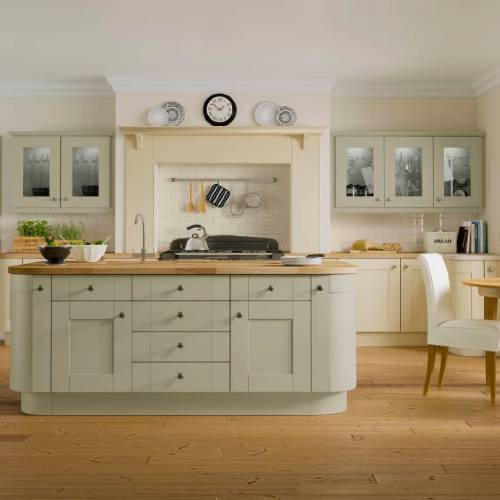
- Symphony Waterford painted doors
- Quartz worktops throughout
- Professional appliance integration
- Andy's electrical upgrades included
Valuation impact:
- Property value before: £165,000
- Property value after: £180,000
- Actual value increase: £15,000
- ROI: 81% recovery
Market performance: Sold within 3 weeks vs. 12-week area average. Achieved full asking price without negotiation.
Estate agent feedback: "The kitchen renovation positioned this property as the best value in its price range. Multiple viewers commented specifically on kitchen quality."
Case Study 2: 1960s Semi, Arnold
Property challenge: Standard semi-detached house in competitive area with several similar properties for sale.
Renovation approach:
- Investment: £24,000
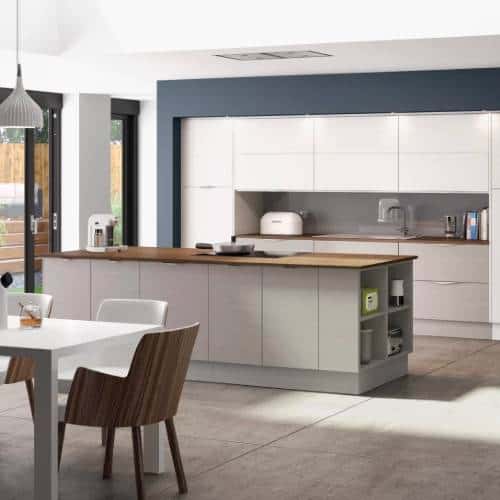
- Open-plan kitchen-dining conversion
- Austin painted doors in contemporary colours
- Island with breakfast bar
- Comprehensive storage solutions
Value impact:
- Property value before: £195,000
- Property value after: £215,000
- Value increase: £20,000
- ROI: 83% recovery
Competitive advantage: Only property in immediate area with modern open-plan kitchen. Buyer competition increased sale price £5,000 above asking price.
Long-term value: Two years later, property valued £8,000 above comparable properties without renovation.
Case Study 3: Modern Detached, Sutton-in-Ashfield
Market positioning: Premium property requiring premium kitchen to match buyer expectations in £300,000+ market segment.
Investment strategy:
- Total cost: £35,000
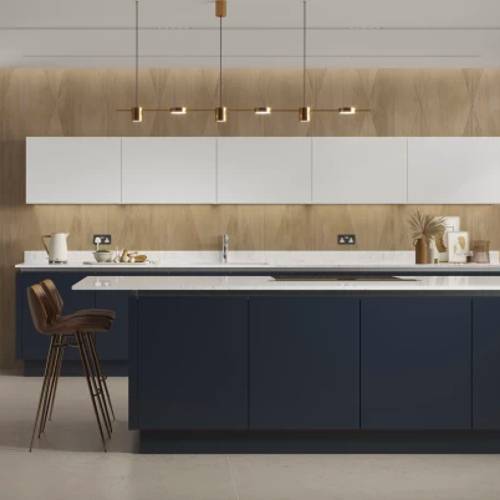
- Bespoke elements and premium finishes
- Professional-grade appliances
- Custom storage solutions
- Statement island design
Financial results:
- Property value before: £275,000
- Property value after: £295,000
- Value increase: £20,000
- ROI: 57% recovery
Market impact: Positioned property as premium option in local market. Attracted buyers from wider area seeking quality renovation.
Additional benefits: Reduced marketing time from typical 8-12 weeks to 3 weeks. Achieved asking price plus £7,000 for included appliances.

Beyond Financial ROI
Quality of Life Benefits
Daily living improvement: Improved functionality, storage, and appearance enhance daily life satisfaction.
Family satisfaction increase: Better kitchens support family activities and create positive home environments.
Stress reduction benefits: Functional storage and workflow reduce daily cooking and cleaning stress.
Entertainment capability enhancement: Quality kitchens support social activities and family gatherings.
Pride of ownership boost: Beautiful, functional kitchens increase satisfaction with home ownership.
Lifestyle Value Quantification
Years of enjoyment calculation: £20,000 renovation enjoyed for 10 years = £2,000 per year for improved daily life.
Daily use frequency consideration: Kitchens used multiple times daily, making quality improvements high-value investments.
Family satisfaction measurement: Happy families report kitchen renovation as one of best home improvements for daily life enhancement.
Entertainment value assessment: Improved entertaining capability provides ongoing social and family benefits.
Stress reduction benefit: Functional kitchens reduce daily stress, providing mental health benefits worth considering.
Energy Efficiency Gains
Utility cost reduction: Modern appliances and improved lighting reduce ongoing energy costs.
Environmental impact improvement: Energy-efficient renovation reduces environmental footprint and may qualify for incentives.
Modern appliance efficiency: New appliances typically use 20-40% less energy than units over 10 years old.
Insulation and sealing benefits: Kitchen renovation often includes improved insulation and draught-proofing.
Long-term saving accumulation: Energy savings accumulate over years, adding to total renovation value.
When NOT to Renovate for Value
Market Ceiling Situations
Neighbourhood value limitations: When renovation would exceed local market values and limit buyer pool.
Over-improvement risks: Investing more than local market can support through increased property values.
Recovery impossibility: Market conditions where renovation costs can't be recovered through sales.
Investment waste potential: Situations where money could be better invested elsewhere for higher returns.
Alternative investment options: Considering whether renovation money could generate better returns in other investments.
Short-Term Ownership
Quick sale necessity: When properties must be sold quickly regardless of condition.
Investment recovery impossible: Insufficient ownership time to recover renovation costs through property value increase.
Market timing challenges: Economic or market conditions that reduce renovation value recovery.
Cost vs. benefit imbalance: When renovation costs exceed likely value increase within ownership timeframe.
Alternative sale strategies: Sometimes selling "as is" with appropriate pricing achieves better net results.
Market Condition Challenges
Economic uncertainty periods: During recessions or uncertain times when buyers prioritise value over quality.
Buyer market conditions: When buyers have many options and can negotiate based on renovation needs.
Interest rate volatility: High interest rates reduce buyer purchasing power and renovation value perception.
Local market saturation: Too many similar properties competing reduce premiums for renovation quality.
Economic downturn timing: Market conditions where buyers focus on price over quality.
Professional Valuation Insights
RICS Surveyor Perspectives
Valuation methodology: How professional valuers assess kitchen renovation impact on property values.
Market condition considerations: Professional assessment of current market conditions and renovation value impact.
Quality standard expectations: Understanding what quality levels valuers consider when assessing renovation impact.
Investment appropriateness: Professional guidance about appropriate renovation investment levels for different property types.
Future trend predictions: Surveyor insights about likely future trends in renovation value impact.
Estate Agent Market Knowledge
Buyer preference insights: Understanding what buyers actually prioritise when viewing properties.
Market condition assessments: Professional assessment of current market conditions and their impact on renovation value.
Competition analysis: Understanding how renovation positions properties relative to current market competition.
Pricing strategy guidance: Professional advice about pricing renovated properties for optimal market response.
Sale timeline predictions: Realistic expectations about how renovation affects property marketing time.
Making the Investment Decision
Financial Assessment Framework
Investment capability evaluation: Honest assessment of available budget and financing options.
ROI expectation establishment: Realistic expectations about likely return on investment based on local market conditions.
Risk tolerance assessment: Understanding and accepting risks involved in renovation investment.
Timeline consideration: Planning renovation timing for optimal value recovery and family benefit.
Alternative option evaluation: Considering whether renovation is best use of available investment capital.
Personal Value Assessment
Quality of life improvement: Assessing value of daily life enhancement through kitchen renovation.
Family satisfaction enhancement: Understanding how renovation will affect family happiness and home satisfaction.
Daily living convenience: Evaluating impact of improved functionality on daily routines and stress levels.
Entertainment capability: Assessing value of improved social and family gathering capability.
Pride and satisfaction: Personal satisfaction value of improved home environment and appearance.
The Honest Assessment
Realistic expectation setting: Understanding likely financial return alongside personal benefits.
Market reality acknowledgment: Accepting current market conditions and their impact on renovation value.
Personal vs. financial benefit balance: Balancing investment in property value with personal satisfaction priorities.
Decision factor prioritisation: Understanding whether financial return or personal benefit is primary motivation.
Satisfaction prediction: Realistic assessment of likely long-term satisfaction with renovation investment.
The Kudos Approach to Value
Honest Market Assessment
Realistic ROI discussion: Honest conversation about likely return on investment based on local market knowledge.
Market condition evaluation: Assessment of current conditions and their impact on renovation value.
Investment appropriateness assessment: Professional guidance about whether renovation makes financial sense for your situation.
Risk factor identification: Clear communication about potential risks and how to minimise them.
Alternative suggestion willingness: Honest advice even when it means recommending against renovation.
Value Optimisation Focus
Investment level appropriate design: Design recommendations that match your property value and target market.
Market appeal maximisation: Design choices that appeal to likely buyers while meeting your personal needs.
Quality vs. cost balance: Professional guidance about where to invest for maximum value and where to save appropriately.
Timeline optimisation: Planning renovation timing for optimal market impact and personal benefit.
Satisfaction assurance: Focus on delivering value through both financial return and personal satisfaction.
Getting Professional Guidance
Kitchen renovation can add significant property value when done appropriately, but success depends on understanding local markets, buyer expectations, and appropriate investment levels.
Emma's market knowledge and design expertise help optimise renovation investments for both personal satisfaction and property value enhancement. Her understanding of local buyer preferences ensures renovation choices that appeal to target markets.
Whether your primary motivation is personal enjoyment or property value, professional guidance helps make decisions that deliver satisfaction and protect your investment.
Call 01623-206-977 to discuss renovation ROI with Emma, or visit our Skegby showroom to understand how design choices affect both daily satisfaction and property value.
Remember: the best kitchen renovation delivers both personal satisfaction and appropriate financial return.